
How I Turned Setbacks into Innovation
The legal field has always fascinated me, driving me to pursue an LLB degree abroad. However, upon returning to Kenya, I encountered the realities that many law graduates face—the long and often frustrating path to becoming a practicing advocate. The process with the Council of Legal Education (CLE) was tedious, overwhelming and expensive, as I had to meet various requirements before I could even enroll in the Kenya School of Law (KSL) for the Advocates Training Program (ATP). What I initially thought would be a straightforward transition ended up becoming a three-year wait.

When I finally joined KSL, I felt a renewed sense of purpose. However, those familiar with the proverbial “9Ps” know all too well that passing the nine units required to clear with CLE is no walk in the park. The 9Ps have long been a source of anxiety for law students, and the pressure to achieve them has led to shattered dreams and lost hope for many aspiring advocates. I, too, faced this challenge—despite my best efforts, I failed one paper, which meant I couldn’t secure the 9Ps. This setback forced me to resit the paper, extending my journey and leaving me in yet another waiting period before I could fully transition into my legal career.
It was during this time that I noticed a significant gap in the way legal practitioners approached technology. The legal fraternity seemed hesitant to embrace the tools and platforms that could streamline their work. My interest in this area grew, but it wasn’t until COVID-19 hit that my ambitions in the LegalTech space truly solidified.
The pandemic disrupted many sectors, including the legal profession. Virtual court sessions, digital collaborations, and other tech-driven solutions became not just desirable but necessary for the functioning of the judicial system. The need for technology in law became more evident than ever before. It was then that I knew that my future lay not just in practicing law but in helping transform it.
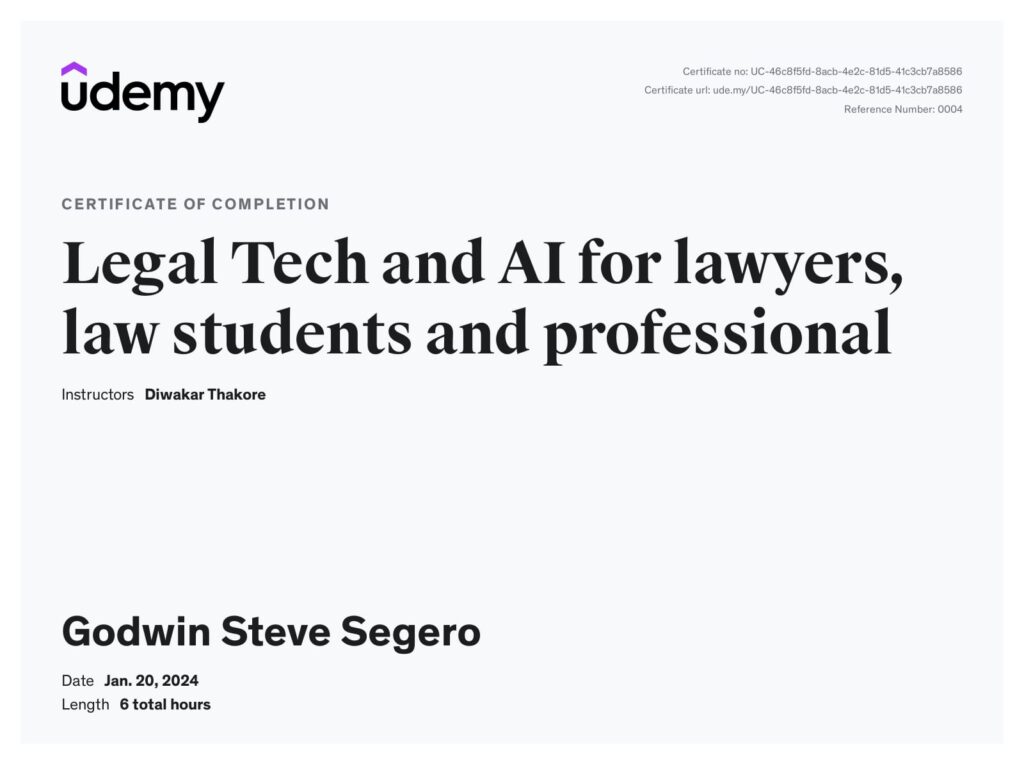
Driven by this vision, I embarked on an intensive learning journey, researching LegalTech and AI in law. I enrolled in several online courses to deepen my understanding, including LegalTech for Lawyers, Law Students, and Professionals on Udemy, which gave me a comprehensive overview of the endless possibilities in this space. I also completed Google’s Essentials of AI course on Coursera, which further broadened my perspective on the role of artificial intelligence in reshaping the legal industry.
Throughout my career, from pupillage at Makadara Law Courts to informal interactions with fellow lawyers, one thing became clear: the reluctance to embrace technology was widespread. Many legal practitioners either didn’t recognize or resisted the undeniable value that technology could add to their work. This resistance to change among my peers only fueled my desire to make a difference in the legal landscape.
This realization culminated in the creation of MtaaLex Solutions—a LegalTech consultancy firm focused on helping lawyers and law firms embrace technology to remain competitive in an ever-evolving profession. With MtaaLex, I aim to bridge the gap between traditional legal practice and modern technological advancements, empowering legal professionals to work smarter, faster, and more efficiently.

As the legal sector continues to evolve, my mission is clear: to be at the forefront of the LegalTech revolution in Kenya and beyond. I believe that technology is not just a tool but an essential driver for the future of legal practice. Through MtaaLex Solutions, I am committed to helping lawyers leverage technology to stay ahead in an increasingly digital world.